Author: Xzect Labs

  • Google Cloud Introduces New Tools at NRF 2025 to Help Retailers Build Gen AI Search and Agents

    Google Cloud Introduces New Tools at NRF 2025 to Help Retailers Build Gen AI Search and Agents

    Google Cloud has announced a powerful set of AI tools to help retailers tackle challenges like rising costs, supply chain issues, and growing demand for personalized shopping experiences. The announcement comes just ahead of NRF 2025: Retail’s Big Show, where these tools will be showcased.

    Smarter Shopping with AI Agents

    Google Cloud’s Google Agentspace brings AI agents powered by Google’s Gemini models to the retail world. These AI agents can handle advanced reasoning and integrate with enterprise data to make shopping more efficient and personalized.

    For example, store employees can use Agentspace to quickly find product details and answer customer questions. A store worker might ask, “What are the new features of this product?” and instantly get detailed, helpful answers.

    Better Search for Online Shopping

    Google has also upgraded Vertex AI Search for Commerce with large language model (LLM) capabilities. This enhancement allows online retailers to offer smarter, more accurate search and product recommendations. Shoppers can find what they need faster, thanks to improved search relevance and personalized results.

    Boosting Product Catalogs

    Google Cloud’s new Gen AI Catalog and Content Enrichment tool uses advanced AI models like Gemini 1.5 and Imagen 3 to improve product catalogs. Retailers can now automatically generate product descriptions, tags, and images with minimal input. This means better product information, higher-quality search results, and more engaging shopping experiences.

    AI-Powered Customer Service

    A new customer service solution integrates AI-powered virtual agents into existing CRM systems. These agents can help schedule appointments, track orders, and recommend products in real-time, offering faster and more personalized customer support.

    Connected Stores and Real-Time Insights

    Google is also introducing tools like Veo and Imagen 3 to create “connected stores.” These tools can turn images into videos and provide real-time insights, improving in-store experiences and making inventory management more efficient.

    Real-Life Impact

    Retailers like Wayfair are already using Google’s AI tools. Wayfair leverages Gemini on Vertex AI to automate product tagging and categorization, helping them launch products faster and improve productivity.

    Google’s Vision for AI in Retail

    These AI tools highlight Google Cloud’s commitment to reshaping retail through technology. By offering smarter operations and personalized shopping, Google aims to create seamless and engaging experiences for both retailers and customers.

    You can see these tools in action at NRF 2025 at Google Cloud’s booth (#5507).


    About Google Cloud
    Google Cloud offers advanced AI, data, and infrastructure solutions to help organizations thrive in the digital world. With services in over 200 countries, Google Cloud supports businesses in transforming their operations with cutting-edge technology.

    Links

    https://blog.google/products/google-cloud/google-cloud-ai-retailers-nrf-2025

  • VLC Media Player Introduces AI Subtitle and Translation Feature at CES 2025

    VLC Media Player Introduces AI Subtitle and Translation Feature at CES 2025

    At CES 2025, VLC Media Player, a household name in video playback, revealed a game-changing feature: AI-powered subtitle generation and translation that works entirely offline. Created by VideoLAN, the non-profit behind VLC, this innovation aims to make video content more accessible across different languages while maintaining user privacy.

    A Major Step for VLC

    Known for its ability to play almost any media format and for its open-source, free-to-use approach, VLC has achieved over 6 billion downloads. Now, the team has integrated artificial intelligence to enhance accessibility.

    Jean-Baptiste Kempf, president of VideoLAN, highlighted the privacy-first design of the new feature.

    “This technology operates entirely on your device, offline, without using the cloud. It’s about making media accessible while keeping your data private,” Kempf said during the CES demo.

    How It Works

    The AI-powered feature generates subtitles in real-time as you watch a video. It can also translate these subtitles into over 100 languages, including English, French, Hebrew, German, and Japanese, all within the VLC app.

    Using open-source AI models, the tool converts audio into text and displays it as subtitles. Originally developed as a plugin based on OpenAI’s Whisper, the feature has now been built directly into VLC’s software. This ensures all processing happens on your device, without requiring an internet connection.

    Making Videos Accessible for All

    This new feature breaks down language barriers, allowing users to enjoy content in their preferred language without needing pre-made subtitles or online tools. It’s especially helpful for regions with limited internet access, ensuring that educational, entertainment, and personal videos can reach more people worldwide.

    Privacy and Performance

    Since all subtitle processing happens locally, users don’t have to worry about data being sent to the cloud, addressing common privacy concerns. However, some wonder whether the feature will demand too much computing power from devices, especially older ones. VideoLAN has promised to share more information soon, including system requirements and performance details.

    Questions and Challenges

    While the feature has been widely praised, some are skeptical about the accuracy of AI-generated subtitles, especially for complex languages and regional dialects. Others worry it could impact jobs for professional translators.

    Despite these concerns, accessibility advocates and tech enthusiasts are optimistic about the potential of VLC’s new tool. Many see it as a step toward more inclusive media consumption and hope it inspires other platforms to prioritize accessibility.

    What’s Next?

    With this announcement, VLC has not only celebrated its download milestone but also cemented its position as a leader in multimedia technology. As we wait for more details about its release, this new feature could set a new standard for media players, emphasizing accessibility and privacy in the age of AI.

    Links

  • Qualcomm Unveils Snapdragon X Series for Affordable AI-Powered CPUs for Budget PCs at CES 2025

    Qualcomm Unveils Snapdragon X Series for Affordable AI-Powered CPUs for Budget PCs at CES 2025

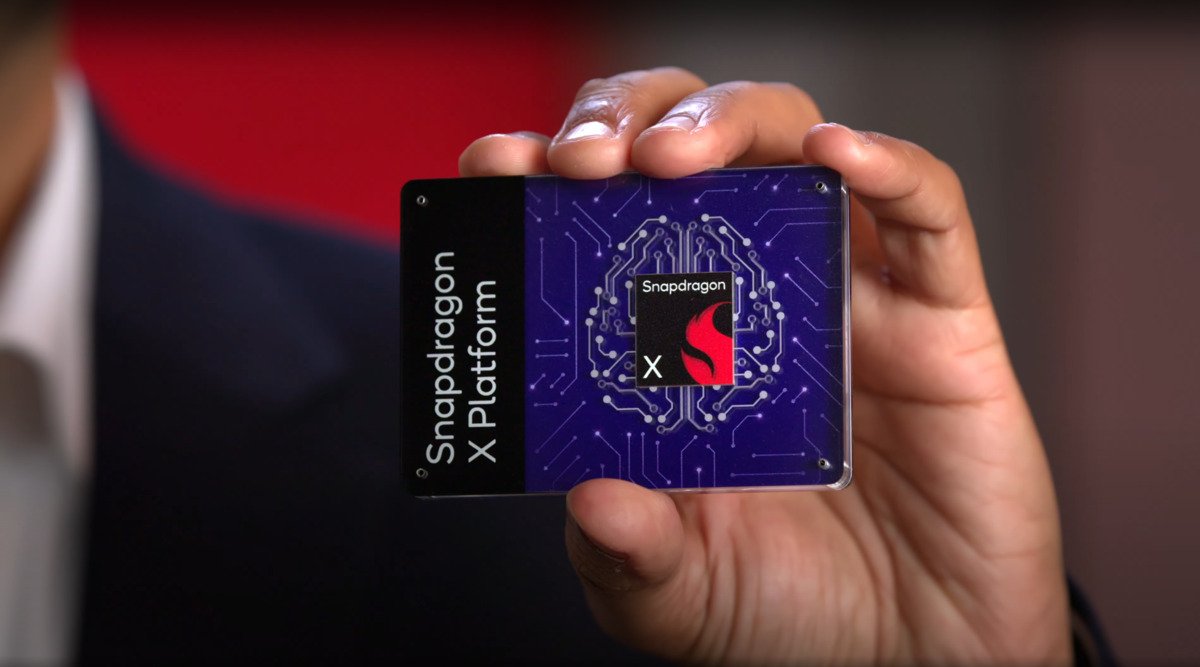
    At CES 2025, Qualcomm introduced its Snapdragon X series CPUs, designed to bring advanced AI-powered computing to budget-friendly PCs. These processors aim to deliver strong performance and efficient AI capabilities at a price point that makes AI PCs accessible to more people.

    Snapdragon X Series: Key Features

    The Snapdragon X series is a new addition to Qualcomm’s computing platform, focusing on affordability without compromising on innovation:

    • Powerful Performance: Equipped with eight Oryon CPU cores, the Snapdragon X offers a peak clock speed of 3GHz, making it competitive with budget processors from Intel and AMD.
    • AI Capabilities: The integrated Hexagon NPU provides 45 TOPS (Trillions of Operations Per Second), enabling AI features like real-time translation, noise cancellation, and advanced video editing. These features, often found in high-end chips, are now available in budget PCs.
    • Battery Efficiency: Qualcomm claims the Snapdragon X offers up to two times longer battery life compared to its competitors while delivering 163% faster performance at the same power consumption levels.
    • Future-Proof Connectivity: Support for 5G, Wi-Fi 7, Bluetooth 5.4, and USB 4 Type-C ensures that devices powered by Snapdragon X are equipped for modern connectivity standards.
    • Affordable AI PCs: These CPUs will drive a new line of Copilot+ PCs starting at under $600, with laptops from brands like Dell, Lenovo, HP, Acer, and Asus expected to hit the market soon.

    Impact on the Market

    The Snapdragon X series could significantly disrupt the PC market, particularly in the budget segment:

    • Democratizing AI: Qualcomm is making AI technology accessible to more users by incorporating high-end NPU performance into affordable devices.
    • Challenging Competitors: This move puts pressure on Intel and AMD, which have yet to offer comparable AI performance in this price range. It may force them to innovate further in the budget segment.
    • More Consumer Choice: Buyers now have a wider selection of budget-friendly PCs with AI features, ideal for tasks like creative work, productivity, and personal use.

    Positive Industry and Consumer Response

    The tech community has reacted positively to the Snapdragon X announcement. Posts on X (formerly Twitter) highlight the impressive AI capabilities at a low cost, with many eager to see real-world performance once the first Copilot+ PCs are released. The chip’s potential for efficient multitasking and creative applications has generated buzz among tech enthusiasts.

    Looking Forward: What’s Next for Qualcomm?

    Qualcomm’s plans for the Snapdragon X series don’t stop here. The company has hinted at future developments, including potential “V2” and “V3” models. These could offer even more powerful or specialized CPUs, catering to a broader range of users and further solidifying Qualcomm’s presence in the budget computing market.

    With the Snapdragon X series, Qualcomm has not only redefined the possibilities for budget PCs but also opened the door to a future where AI-powered computing becomes a standard feature for all users.

    Links

    https://www.qualcomm.com/snapdragon/news/welcome-to-the-future-with-snapdragon-x-unveiled-at-ces-2025-

    https://www.qualcomm.com/products/mobile/snapdragon/laptops-and-tablets/snapdragon-x

  • SEED Partners with Sui Foundation to Revolutionize Web3 Gaming

    SEED Partners with Sui Foundation to Revolutionize Web3 Gaming

    In a major step for Web3 gaming, SEED, a top developer of blockchain-based games, has secured a strategic investment from the Sui Foundation. This partnership aims to use the power of the Sui blockchain to create a massive and innovative gaming ecosystem, targeting 100 million users.

    Investment Details

    With the support of the Sui Foundation, SEED will use Sui’s efficient and scalable blockchain technology to build a next-generation gaming platform. SEED, already home to over 60 million users with its popular SEED App, plans to expand its presence in Web3 gaming by offering games that combine VR, AI, and easy onboarding through a messenger-based system.

    • Sustainability: The goal is to build games that are not only fun but also sustainable, focusing on both environmental and economic impact. Blockchain technology will power new game economies.
    • Scalability: SEED plans to use Sui’s high-speed blockchain to handle millions of transactions per second, ensuring smooth gameplay even as the user base grows.
    • Innovation: SEED aims to create a connected gaming universe where players can own, trade, and monetize digital assets securely on the blockchain.

    Statements from Leaders

    Dees, CEO of SEED, shared excitement about the partnership, saying, “Choosing Sui as our technical partner allows us to unlock new levels of innovation and empower game developers. Sui’s scalability and efficiency will help us reach our goals faster.”

    Evan Cheng, Co-founder and CEO of Mysten Labs, the team behind Sui, added, “SEED’s vision for a sustainable, mass-user gaming ecosystem perfectly matches our goals for blockchain development. We’re excited to see what the future holds for Web3 gaming through this partnership.”

    Market Impact

    The announcement has received positive feedback from the blockchain and gaming communities, with many highlighting the potential of SEED to set new standards in Web3 gaming. This partnership shows the growing importance of Sui blockchain in the gaming world.

    Looking Forward

    With this investment, SEED plans to release several high-profile games that combine the best aspects of popular titles like Pokémon Go and Axie Infinity, while diving deeper into Web3 technology. SEED’s future strategy includes:

    • Game Development: Creating immersive games that allow players to truly own in-game assets using blockchain.
    • Community and Ecosystem Growth: Growing the SEED community through initiatives that encourage player involvement and governance.
    • Integration with Sui: Using Sui’s unique features, such as sponsored transactions and dynamic assets, to enhance gameplay and engagement.

    This partnership marks a major step forward for Web3 gaming and sets the stage for a more immersive, interconnected gaming experience for millions of players.

  • Google Introduces Daily Listen: A Personalized AI-Powered Podcast for News

    Google Introduces Daily Listen: A Personalized AI-Powered Podcast for News

    Google has launched a new feature called Daily Listen as part of its Search Labs program. This feature turns your Google Discover feed into a personalized, AI-generated podcast. It provides users with a quick, five-minute audio summary of the news and topics they care about, based on their search history and Discover feed.

    How Does Daily Listen Work?

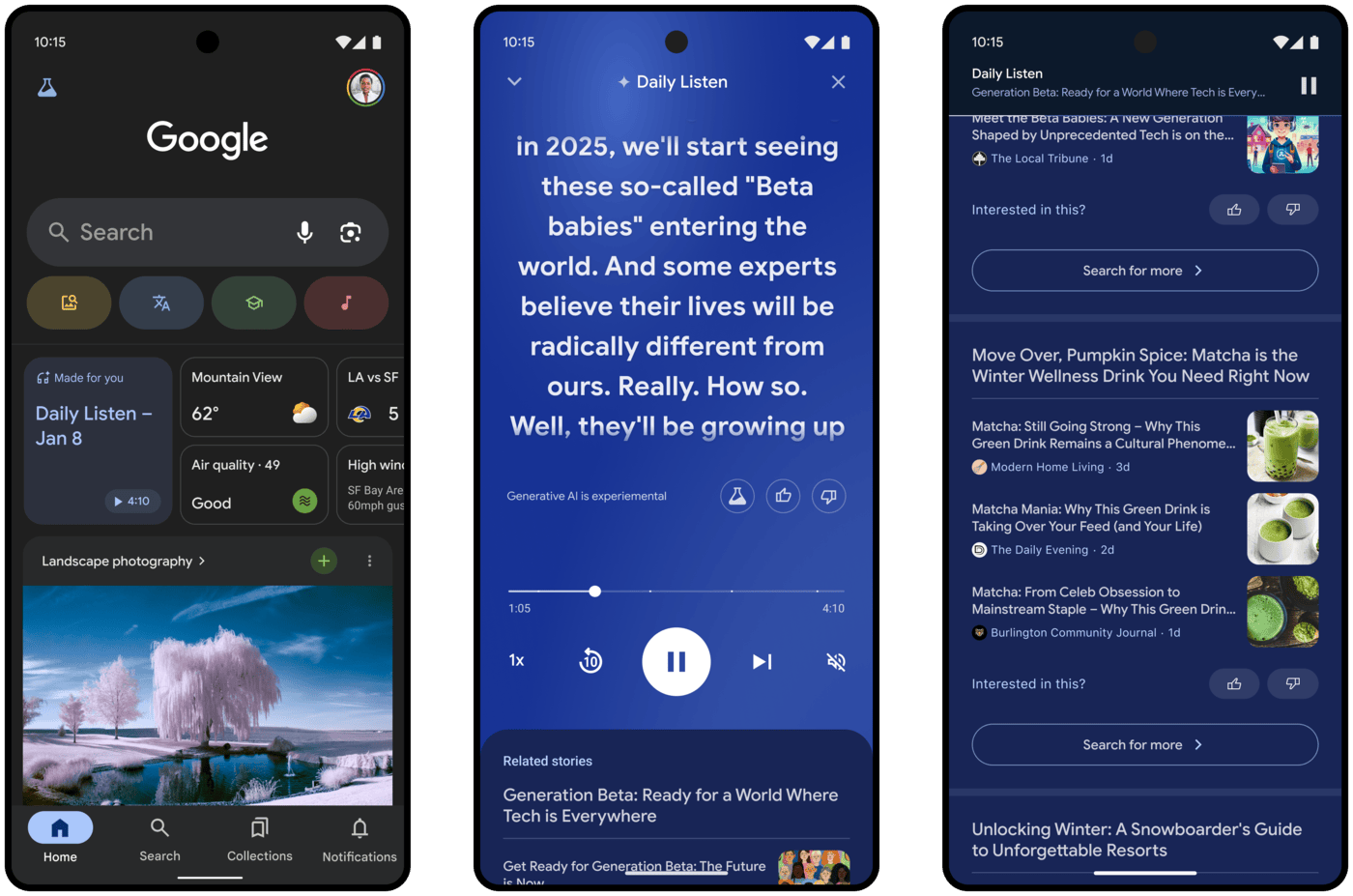
    Daily Listen uses Google’s AI to analyze what users are interested in and creates a short, daily podcast episode. It pulls real-time information from your Google Discover feed. Once activated, the feature shows up as a widget in the Google app on both Android and iOS, just below the search bar. To use it, you need to join Search Labs in the Google app.

    User Experience

    When you turn on Daily Listen, you get a daily audio summary of the top stories and headlines that match your interests. The podcast includes:

    • Verbal narration of the news.
    • A text transcript to read along if you prefer.
    • Links to “Related Stories” at the end of each episode, so you can explore more topics.

    The interface works like a regular podcast player, where you can play, pause, and skip through the audio. You can also give feedback using thumbs up or thumbs down to help improve future episodes.

    AI and Personalization

    Daily Listen is powered by generative AI, which creates the news summary and narration. It’s still in the experimental phase, so sometimes the AI may not be completely accurate. Google is testing how the technology can make news more personalized and engaging, while also learning from user feedback to improve over time.

    Availability and Future Plans

    Currently, Daily Listen is available only in the U.S. for users who are part of Search Labs. Google is rolling it out slowly to test how well it works and gather feedback. The goal is to make news consumption more interactive and tailored to individual preferences in the future, possibly reducing the need to read multiple articles.

    This new feature hints at the future of personalized, audio-based news consumption, where content is delivered in a way that suits each person’s unique interests.

  • xAI Launches Grok AI App for iOS with Real-Time Information and Image Generation Features

    xAI Launches Grok AI App for iOS with Real-Time Information and Image Generation Features

    In a major step forward for mobile AI, xAI has officially launched the Grok AI app for iOS devices. This app, designed to bring artificial intelligence closer to everyday users, offers a range of advanced features like real-time information retrieval and high-quality image generation. Initially limited to the web and integration within X (formerly Twitter), Grok now provides a standalone experience tailored for smartphone users.

    What Makes the Grok AI App Unique?

    Real-Time Information at Your Fingertips

    Grok is powered by xAI’s cutting-edge technology and pulls data from both the web and X. It provides real-time answers to queries, such as the latest news, weather updates, or trending topics, directly in the chat interface.

    Create Stunning Images Instantly

    The app features xAI’s Aurora model, which allows users to generate high-quality visuals simply by describing them. This feature is ideal for educators, content creators, and anyone looking to visualize ideas quickly and effectively.

    Privacy and Accessibility

    • No login is required to access basic features, offering a smooth start for new users.
    • Signing in with an X account or Apple ID unlocks personalized features, like syncing chats across devices.
    • xAI emphasizes privacy, ensuring secure data handling throughout the app.

    Interactive and Engaging

    Grok is not just a tool for answers—it’s designed to engage users with conversational responses. Whether tackling complex topics or answering casual questions, it simplifies information in a fun and approachable way.

    Launch Details and Availability

    The app was beta-tested in December 2024 and is now officially launched in the U.S. It is also reportedly available in other regions, including India. Unlike earlier iterations limited to X Premium subscribers, the Grok AI app is free to download from the App Store. This change makes it more competitive with other AI chatbots like ChatGPT, Claude, and Gemini.

    User Experience

    The app provides an intuitive interface. Users can:

    • Open a new chat window to ask questions or generate images.
    • View personalized content like weather updates or restaurant suggestions when signed in with X.
    • Control their experience with playback options and real-time recommendations.

    The app’s integration with X makes it an even more powerful tool for users who want a personalized AI experience.

    Community Reactions and Future Potential

    The Grok AI app has generated excitement among users and developers on social media platforms like X. Many users have shared their experiences, praising the smooth performance and high-quality visuals created by Grok. The app is being discussed for its potential uses in:

    • Education: Helping students and educators simplify complex topics.
    • Content Creation: Providing tools for creatives to ideate and execute projects.
    • Daily Assistance: Offering quick answers, recommendations, and inspiration for everyday tasks.

    xAI’s Vision and Upcoming Features

    xAI’s mission with Grok is to make AI more accessible and integrated into daily life. According to the developers, the app’s future updates may include:

    • An “Unhinged Mode” for playful and candid interactions.
    • Enhanced features for deeper personalization and interaction.

    A Glimpse Into the Future

    The launch of the Grok AI app signals a significant leap toward making AI tools part of everyday life. With its blend of real-time information, creative tools, and user-centric design, Grok is setting a new standard for mobile AI.

    As xAI continues to develop new features, Grok is poised to become a go-to app for users seeking smarter, more personalized interactions with technology.

  • DAMAC Group and MANTRA Announce $1 Billion Blockchain Deal to Transform Real Estate and Asset Management

    DAMAC Group and MANTRA Announce $1 Billion Blockchain Deal to Transform Real Estate and Asset Management

    In a major move for both the real estate and blockchain industries, Dubai-based developer DAMAC Group has teamed up with MANTRA, a blockchain platform that focuses on turning real-world assets into digital tokens. This groundbreaking $1 billion agreement will change how assets are managed, traded, and financed in the Middle East, using blockchain technology for better transparency, security, and accessibility.

    The Deal Details

    DAMAC and MANTRA’s partnership will focus on tokenizing a large portion of DAMAC’s diverse assets, including real estate, hotels, data centers, and more. The tokenization process will begin in early 2025, and the tokens will be available exclusively on MANTRA’s blockchain platform called MANTRA Chain, which is designed for tokenizing real-world assets.

    • Transparency and Security: Tokenization on the blockchain ensures every asset’s ownership and transactions are securely recorded on an unchangeable ledger, providing transparency for investors.
    • Accessibility: By tokenizing these assets, DAMAC plans to open up high-value investments to smaller investors, allowing them to own fractions of luxury properties and other valuable assets.
    • Liquidity: Turning physical assets into digital tokens will increase liquidity, making it easier for investors to buy and sell these assets on blockchain platforms.

    Why It Matters

    • Innovation in Real Estate: For DAMAC, this partnership is an important step towards innovation. Amira Sajwani, Managing Director of DAMAC, sees it as a “natural extension” of their commitment to forward-thinking solutions.
    • Growth for MANTRA: This deal helps MANTRA grow in the real-world asset tokenization space, with CEO John Patrick Mullin calling it “an endorsement for the RWA industry” and showing how blockchain can combine traditional finance with digital assets.
    • Economic Impact: The UAE and the Middle East are working to become leading centers for digital assets. This deal could help bring more tech and finance companies to the region.

    Broader Implications

    This partnership is part of a larger trend where companies are using blockchain to transform traditional business models. Tokenizing real-world assets, like those of DAMAC, could become more common, offering a more efficient, secure, and inclusive way to invest. The tokenization of assets could set a new standard for the real estate industry and other sectors, leading to more widespread use of blockchain technology.

    Market Reaction

    After the announcement, MANTRA’s native token, OM, saw a positive response in the market, reflecting investor confidence in this partnership. The deal is also part of DAMAC’s broader strategy, which includes a recent $20 billion investment in US data centers, showing the company’s growing focus on tech and real estate.

    Looking Forward

    With the tokenized assets expected to go live in early 2025, the real estate industry is closely watching the success of this deal. If successful, it could lead to more partnerships that change the way we think about real estate and asset management. This could be a model for asset tokenization around the world and offer a new way to handle investments in the digital age.

  • FCC Introduces U.S. Cyber Trust Mark to Enhance IoT Device Security

    FCC Introduces U.S. Cyber Trust Mark to Enhance IoT Device Security

    In an important step to improve consumer trust in the safety of smart devices, the Federal Communications Commission (FCC) has introduced the U.S. Cyber Trust Mark. This initiative aims to offer a clear and easily recognizable symbol that shows Internet of Things (IoT) devices meet high cybersecurity standards, helping protect consumers from online threats.

    What is the U.S. Cyber Trust Mark?

    The U.S. Cyber Trust Mark is a safety label designed for consumer IoT products, similar to the Energy Star logo for energy efficiency. This new mark indicates that a device has undergone rigorous testing to meet cybersecurity standards. The program was officially announced in January 2025 after a series of discussions and proposals that started in 2023. It addresses the growing need to secure the rapidly expanding world of connected devices.

    How Does It Work?

    To earn the Cyber Trust Mark, manufacturers must have their IoT products tested by accredited labs based on standards set by the National Institute of Standards and Technology (NIST). These standards require strong, unique default passwords, data protection, automatic software updates, and detection of security incidents. Products that pass these tests are allowed to display the Cyber Trust Mark logo along with a QR code. Consumers can scan the QR code to access detailed information about the device’s security, including its support duration and update policies.

    Scope and Participation

    The Cyber Trust Mark applies initially to consumer IoT devices such as smart home appliances (e.g., refrigerators, televisions), security cameras, and fitness trackers. However, it does not cover enterprise or industrial devices, nor does it apply to some foreign-made communications equipment deemed a security risk. While participation in the program is voluntary, major companies like Amazon, Best Buy, Google, LG, and Samsung have shown support, suggesting that many consumer products will adopt this label.

    Impact on Consumers and Manufacturers

    For consumers, the Cyber Trust Mark provides a simple, visible way to choose devices that have been tested for security, making it easier to avoid potential cyber threats like data breaches or botnet attacks. This mark helps consumers feel more confident about the devices they purchase, and also educates them about the importance of cybersecurity.

    For manufacturers, this program encourages the practice of designing products with security in mind from the start. It may become a competitive advantage, as products with the Cyber Trust Mark may stand out in a crowded market. However, it also means manufacturers must continuously ensure that their products meet security standards, even as they evolve.

    Looking Ahead

    The FCC plans to collaborate internationally to recognize similar cybersecurity labeling efforts around the world, which could lead to wider adoption of these practices globally. Additionally, the FCC is seeking public input on ways to improve the program, including possible requirements for disclosing the origin of software or the location of data servers, addressing concerns about national security and data privacy.

    Links

    https://www.fcc.gov/CyberTrustMark

  • Microsoft Releases Phi-4, an Open-Source Small Language Model That Is Now Available on Hugging Face.

    Microsoft Releases Phi-4, an Open-Source Small Language Model That Is Now Available on Hugging Face.

    Microsoft has made its AI model, Phi-4, free and open for everyone to use. This small language model (SLM), introduced in December 2024, is now available on the popular AI-sharing platform Hugging Face. It comes with an MIT license, meaning it can be used for academic research and business projects.

    What Makes Phi-4 Special?

    Phi-4 is a compact AI model with 14 billion parameters. It’s designed to handle challenging reasoning tasks, like solving math problems, and performs just as well as larger, more expensive models.

    Key Features of Phi-4

    1. Efficient Design: Phi-4 shows that smaller models can still perform at a high level without requiring lots of computing power. This makes it easier to use in a wide range of applications.
    2. Versatile Performance: Phi-4 has done better than larger models, such as Llama 3.3 (70B), in tasks like science questions, coding, and benchmarks like GPQA and MATH.
    3. High-Quality Data Training: Microsoft used top-quality synthetic and curated organic data to train the model. This makes Phi-4 accurate and reliable for solving complex problems.
    4. Free and Open-Source: By making Phi-4 open-source, Microsoft is encouraging innovation. Developers can modify and fine-tune it for specific uses, which opens the door to many creative possibilities.

    How to Access Phi-4

    Anyone can download Phi-4 from Hugging Face. The model weights and other resources are available for free, making it easy for developers and researchers to get started.

    Why This Release Matters

    The AI community has welcomed Microsoft’s decision. Posts on social media show excitement about Phi-4’s strong performance and its open-source availability. Many see it as a tool that could improve educational tools, business processes, and productivity apps.

    Microsoft’s Focus on Responsible AI

    Microsoft is also focused on making AI safe and ethical. The company says Phi-4 has gone through careful testing to ensure fairness, privacy, and reliability.

    What’s Next?

    Microsoft has big plans for its AI models. The company plans to create more small, efficient models for specialized tasks. This step not only supports innovation but also pushes other companies to think about open-sourcing their AI technology.

    To explore Phi-4 and its potential, visit Hugging Face today!

    Links:

    https://huggingface.co/microsoft/phi-4

  • Meet Omi: The $89 AI Gadget That Listens, Learns, and Might Read Your Mind

    Meet Omi: The $89 AI Gadget That Listens, Learns, and Might Read Your Mind

    At the CES 2025 event in Las Vegas, Based Hardware, a tech startup from San Francisco, introduced Omi, an affordable AI wearable designed to boost productivity and make interacting with technology easier. Priced at $89, Omi is not just another gadget—it’s a glimpse into the future, with plans to read brain activity in upcoming versions.

    What Makes Omi Unique?

    Omi has a sleek, minimalist look, resembling a mint from a Mentos pack. You can wear it as a necklace or attach it to your head with medical tape for a futuristic “brain interface” experience. The first version works with audio only, but in mid-2025, Based Hardware plans to release a brain-interface module. This upgrade will allow Omi to interpret signals from your brain, making it more intuitive to use.

    How Does Omi Work?

    The device uses advanced AI powered by GPT-4o to listen to your voice and respond without needing a wake word like “Hey Omi.” It can:

    • Take notes during meetings.
    • Create to-do lists.
    • Answer questions.
    • Provide personalized advice by remembering details about you.

    Omi’s battery lasts up to three days, making it a practical companion for everyday use.

    The upcoming brain-interface module will add a new layer of functionality. With a single electrode, Omi will try to read brain signals to understand when you’re interacting with it versus random thoughts. While this feature is still in development, it offers a sneak peek at how technology might evolve to be even more integrated into daily life.

    Privacy and Ethical Concerns

    A device that can potentially read thoughts raises understandable privacy concerns. To address this, founder Nik Shevchenko emphasized Omi’s open-source design. Users can choose where their data is stored, such as locally on their device, or see exactly where it’s sent. This approach aims to provide transparency and reduce fears of misuse.

    How Does Omi Compare to Other Gadgets?

    Omi isn’t trying to replace smartphones but instead works alongside them to enhance productivity. Unlike other AI wearables that overpromise and underdeliver, Omi focuses on complementing existing technology.

    The device also has an app store, allowing developers to create custom applications for Omi. This feature could turn it into a versatile platform for personal AI assistance.

    The Bigger Picture

    Devices that interact with thoughts aren’t new, but Omi’s focus on affordability and open-source ethics sets it apart. It has already generated buzz online, with some people excited about its potential and others raising concerns about ethics and practicality.

    Whether it’s summarizing your day, creating a to-do list, or offering a glimpse into a future of thought-controlled technology, Omi might be a game-changer.

    Links

    https://www.omi.me

    Demo Video: