Category: Uncategorized

  • Hugging Face Launches Smolagents to Simplify AI Agent Development with Open Source LLMs

    Hugging Face Launches Smolagents to Simplify AI Agent Development with Open Source LLMs

    Hugging Face has introduced Smolagents, an open-source library designed to make building AI agents with large language models (LLMs) easier for developers and enthusiasts. By simplifying the process, Smolagents opens the door for a wider audience to create intelligent systems with minimal complexity.

    A Simpler Approach to AI

    Smolagents is built to be lightweight and easy to use, with just 1,000 lines of code forming its core. Unlike traditional, complex methods for integrating LLMs into agent systems, Smolagents offers a streamlined approach that includes both code-based and JSON-based agents, making it flexible and beginner-friendly.

    Key Features of Smolagents

    1. CodeAgent for Python Actions: The standout feature, CodeAgent, allows agents to write and execute Python actions directly. This method is faster and more accurate than relying on text or JSON descriptions.
    2. Support for Multiple LLMs: Smolagents works seamlessly with Hugging Face models via their free API and supports over 100 other LLMs through LiteLLM, giving users a range of options for their projects.
    3. Hugging Face Hub Integration: Developers can easily share and reuse tools through the Hugging Face Hub, speeding up development and fostering collaboration within the community.
    4. Security and Efficiency: The library ensures safe execution of code in sandboxed environments, reducing risks, while also minimizing the number of LLM calls to maximize performance.

    Real-World Applications

    Smolagents is ideal for industries needing dynamic and adaptable workflows. It can be used for automating customer service in sectors like travel, building intelligent assistants for data analysis, or creating educational tools. By reducing the complexity of developing AI-powered agents, Smolagents enables faster and broader adoption of AI solutions.

    Community Response and Future Plans

    The AI community has responded positively to Smolagents, with developers praising its simplicity and versatility on platforms like X (formerly Twitter). Many have called it a “game-changer” for building AI tools without requiring advanced knowledge of system architectures.

    Hugging Face plans to expand Smolagents by adding new features and integrations based on feedback. This library replaces the older transformers.agents, reflecting Hugging Face’s commitment to creating more user-friendly AI development tools.

    The Bigger Picture

    Smolagents is more than just a technical tool; it represents a step toward democratizing AI. By making AI agent development accessible and efficient, Hugging Face is empowering developers and innovators to explore new possibilities, paving the way for a future where intelligent systems are easier to build and deploy.

    Links

    https://huggingface.co/docs/smolagents/index

    https://github.com/huggingface/smolagents

  • OpenAI Delays Launch of Media Manager Tool, Leaving Creators Without Copyright Protection

    OpenAI Delays Launch of Media Manager Tool, Leaving Creators Without Copyright Protection

    OpenAI, the leading artificial intelligence research organization, has missed its self-imposed deadline to launch the much-anticipated Media Manager tool. Originally announced in May 2024, the tool was designed to help content creators protect their intellectual property by allowing them to opt-out of having their copyrighted materials used in AI training data. However, recent reports reveal that the launch has been significantly delayed, leaving creators without a clear solution for managing their rights.

    Background on Media Manager

    The Media Manager tool was conceived as a way to help creators manage how their content—such as text, images, audio, and video—was used in AI systems. The tool was intended to provide an automated system for identifying content and reflecting creators’ preferences, making it easier for them to exclude their works from datasets used to train AI models like those behind ChatGPT.

    Reasons for the Delay

    Sources inside OpenAI and tech publications suggest that the development of Media Manager has not been a priority. A former employee told TechCrunch, “To be honest, I don’t remember anyone working on it,” highlighting the lack of focus on the project. Furthermore, a member of OpenAI’s legal team who had been involved in the tool’s development transitioned to a part-time consulting role in October 2024, signaling a shift in priorities away from Media Manager.

    Creator and Expert Reactions

    The delay has sparked frustration among creators. Intellectual property experts and content creators have criticized the lack of progress, pointing out that even major platforms like YouTube and TikTok, which have invested heavily in content identification systems, still struggle with large-scale copyright management. Critics argue that OpenAI’s approach—requiring creators to opt-out of using their content in AI training—places an unfair burden on creators to protect their own work.

    Ed Newton-Rex, founder of Fairly Trained, expressed doubts about the tool’s future impact. “Most creators will never even hear about it, let alone use it,” he told TechCrunch, questioning whether the tool would be effective in addressing the broader issues of AI and intellectual property rights.

    OpenAI’s Current Measures

    In place of Media Manager, OpenAI offers a manual process where creators can request the removal of their copyrighted materials from training data. This approach, which requires creators to list and describe each piece of content individually, has been criticized as inefficient and burdensome.

    Legal and Ethical Considerations

    The delay in delivering an effective tool for creators comes amid increasing scrutiny over the use of copyrighted materials in AI training. While OpenAI defends its practices under the “fair use” doctrine, criticism continues to mount from artists, writers, and media organizations who feel their intellectual property rights are being violated.

    Looking Forward

    The future of Media Manager remains unclear. OpenAI has not provided a new release timeline, and there are growing concerns about whether the tool will effectively address the complex legal and ethical challenges surrounding AI training and copyright. The delay leaves creators questioning if and when they will have the tools they need to protect their work.

  • Samsung’s Smart Fridges Will Soon Recommend and Order Your Groceries on Instacart

    Samsung’s Smart Fridges Will Soon Recommend and Order Your Groceries on Instacart

    Samsung Electronics has teamed up with Instacart to introduce a groundbreaking feature that promises to change the way consumers manage their kitchen inventory and shop for groceries. The collaboration will allow Samsung’s Bespoke smart refrigerators to use AI to suggest and order groceries directly through Instacart, making kitchen management more efficient and convenient.

    The Future of Household Convenience

    Samsung’s new Bespoke refrigerator models, including the 32-inch AI Family Hub+ and the 9-inch AI Home, will come with AI Vision Inside technology. This innovative system uses AI-powered cameras to monitor the contents of your fridge, keeping track of when items are running low or expired. The integration with Instacart’s product-matching API means the fridge can automatically suggest and even add these items to your Instacart shopping cart for purchase.

    How It Works

    • Food Recognition: The AI Vision Inside technology can identify up to 37 different food items, including fresh produce, ensuring your shopping list is always up to date with your actual needs.
    • Seamless Integration: You can review and approve your grocery list right from the fridge’s touchscreen. Once approved, the order is placed through Instacart for same-day delivery from local retailers, eliminating the need for last-minute grocery runs.
    • Manual Additions: Items not automatically recognized can be manually added through the Samsung Food app, available on both the fridge and your smartphone, ensuring all food inventory is managed.
    • Updates for Existing Models: Existing owners of the AI Family Hub+ will receive firmware updates in 2025, enabling this new functionality on older models.

    Consumer and Industry Response

    The news has generated significant excitement among both tech enthusiasts and everyday consumers. Social media platforms like X (formerly Twitter) are buzzing with curiosity about how these smart appliances will transform daily life. Industry analysts see this as a step toward smarter homes where appliances anticipate user needs and improve the convenience of household tasks.

    Privacy and Data Concerns

    While the technology promises great convenience, it raises questions about privacy. Samsung has assured users that AI-generated suggestions will be handled in accordance with strict privacy policies. Users will also have full control over what data is shared or stored.

    Looking Ahead

    This partnership is more than just about ordering groceries—it’s about how AI can simplify everyday life. As smart home technology advances, Samsung’s collaboration with Instacart may inspire other companies to explore similar integrations, paving the way for smarter kitchens where appliances work together to optimize household management.

    Samsung’s move with Instacart represents a significant shift toward a more connected and convenient lifestyle, where our refrigerators know our grocery needs before we do. With the rollout of this new feature, the future of smart homes is looking brighter than ever.

    News Source:

    https://news.samsung.com/global/samsung-joins-forces-with-instacart-to-enhance-kitchen-experiences-through-hallmark-innovation

  • Nvidia Acquires Israeli AI Startup Run:ai for $700M, Plans to Make It Open-Source

    Nvidia Acquires Israeli AI Startup Run:ai for $700M, Plans to Make It Open-Source

    Nvidia Corporation has finalized its acquisition of Run:ai, an Israeli AI startup known for its software that optimizes hardware for AI tasks. The deal, valued at approximately $700 million, enhances Nvidia’s capabilities in the growing AI infrastructure market.

    Acquisition Approved After Regulatory Review

    The acquisition was initially announced in April of last year but faced regulatory scrutiny from both the U.S. Department of Justice and the European Commission due to potential antitrust concerns. After extensive reviews, both regulatory bodies approved the deal, allowing Nvidia to close the transaction.

    Run:ai’s Technology and Role

    Run:ai specializes in AI workload optimization. Its flagship product, Atlas, helps organizations manage AI computing resources by automating the distribution of tasks. This enables companies to maximize the efficiency of their AI hardware. Run:ai’s software serves a range of industries, including healthcare and automotive.

    Strategic Acquisition for Nvidia

    This acquisition marks Nvidia’s second major investment in Israel, following its $7 billion purchase of Mellanox Technologies in 2020. Run:ai, which raised $118 million in funding prior to the deal, will now operate as part of Nvidia, with plans to expand its technology and capabilities under Nvidia’s resources.

    Impact on the AI Market

    Nvidia’s acquisition of Run:ai is expected to bolster its AI infrastructure offerings, strengthening its position in the market, where it already holds around 80% of the AI GPU market share. Run:ai’s plans to open-source its software could also increase accessibility and foster innovation within the AI ecosystem.

    Industry Reaction

    The acquisition has received positive reactions from the tech community, with many highlighting Nvidia’s strategy to integrate and build on existing technologies. However, some concerns have been raised about the potential for reduced competition, echoing the regulatory scrutiny the deal faced.

    Looking Ahead

    The acquisition of Run:ai is seen as a strategic move for Nvidia to address the rising demand for AI solutions across various industries. Nvidia aims to accelerate AI adoption and expand its research and development efforts, particularly in Israel, where it already has a significant workforce.

  • China’s AgiBot Releases Massive Humanoid Robot Training Data Set

    China’s AgiBot Releases Massive Humanoid Robot Training Data Set

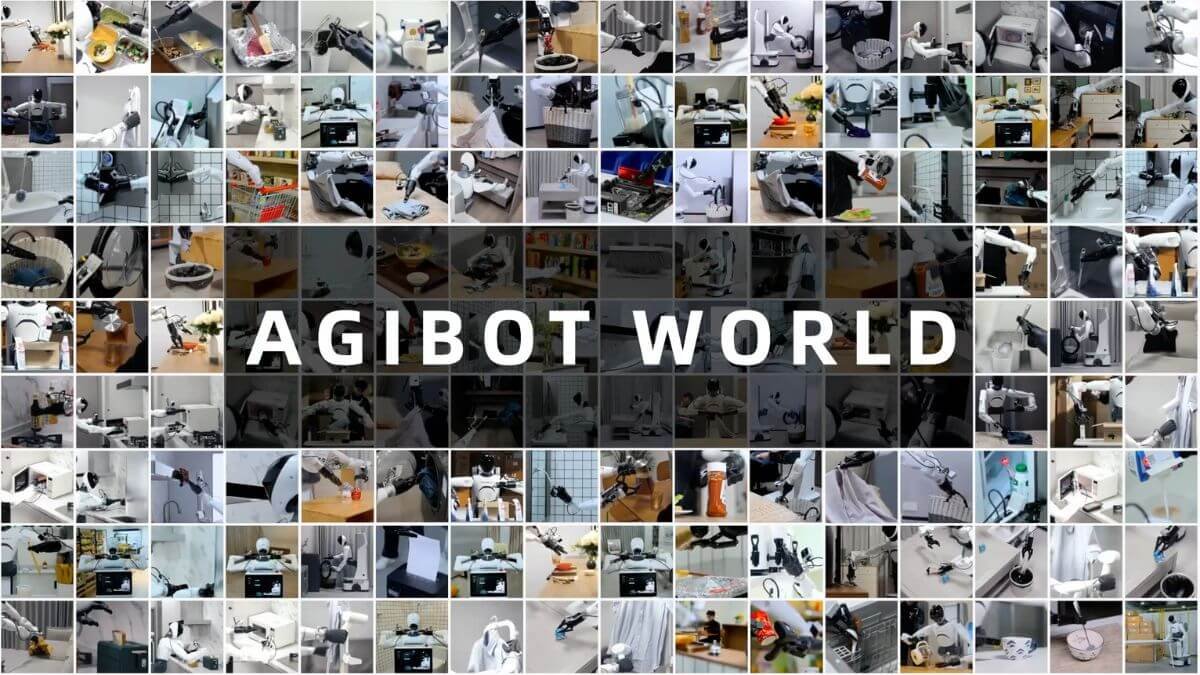
    AgiBot, a Chinese robotics startup, has launched what is being hailed as the largest-ever dataset for training humanoid robots in everyday activities. The “AgiBot World” dataset is designed to advance humanoid robotics research and development, offering a valuable resource for both academic and industrial applications in the field.

    A Major Step for Robotics Research

    AgiBot World isn’t just another dataset; it’s a comprehensive collection that includes over one million robot movements collected from 100 different robots. The dataset covers a variety of real-world scenarios, with more than 100 environments such as homes, offices, retail spaces, and industrial settings. These scenarios are designed to help robots master tasks like fine manipulation, using tools, and collaborating with other robots.

    Diverse and Complex Skills

    The AgiBot World dataset contains more than 80 types of everyday activities, including arranging flowers, cooking, and processing checkout transactions. By incorporating a broad range of tasks, it offers a rich training ground for humanoid robots to learn how to interact with human environments in complex and useful ways.

    Open Source for Global Collaboration

    In an effort to foster worldwide collaboration, AgiBot has made the dataset available to AI humanoid developers at no cost. Hosted on popular platforms like GitHub and Hugging Face, AgiBot World is designed to make progress in embodied AI much easier, much like how ImageNet revolutionized computer vision.

    A Game-Changer for Humanoid Robotics

    The release of AgiBot World is being seen as a groundbreaking moment for humanoid robotics, potentially speeding up the transition of robots from controlled environments to real-world applications. By providing detailed and varied data, AgiBot World could significantly improve how robots learn to perform everyday tasks.

    Collaboration Between Academia and Industry

    The availability of this dataset to both academic researchers and industrial developers could help democratize access to high-quality data. This open approach is expected to lead to breakthroughs in both robotic learning algorithms and hardware design, bridging the gap between theory and practical application.

    AgiBot’s Ambitions

    Founded in February 2023, AgiBot aims to lead the charge in the development of humanoid robots. The company has already released several models, including the Yuanzheng A2 and Raise A1, which are designed for precision tasks. AgiBot is also scaling up production, having already mass-produced nearly 1,000 humanoid robots by the end of 2024.

    Competing Globally

    AgiBot’s open-source data release comes as the company faces increasing competition from global robotics players like Tesla, which is developing its own humanoid robot, Optimus. AgiBot’s approach, which combines open-source data with mass production, could give it a unique advantage in the rapidly growing market for humanoid robots.

    Reactions and Future Prospects

    The tech community has reacted positively to the release of AgiBot World, with many expressing excitement about its potential to transform the robotics industry. However, concerns about data privacy, security, and the ethical use of robots will need to be addressed as the company continues to push forward.

    Dataset Links:

    https://huggingface.co/datasets/agibot-world/AgiBotWorld-Alpha

  • OpenAI Launches O3 Models: A New Era of AI Reasoning

    OpenAI Launches O3 Models: A New Era of AI Reasoning

    OpenAI has introduced its newest AI models, O3 and O3-mini, which promise to bring major improvements in how AI thinks and solves problems.

    Smarter and Better Problem-Solving

    The O3 models are designed to handle logic, problem-solving, and complex tasks much better than older versions. OpenAI says these models are especially good at coding, math, and science. For example, O3 is 20% better than its predecessor, O1, in coding tasks. It also scored 96.7% on the AIME 2024 math exam and 87.7% on a graduate-level science test, making it highly reliable for technical challenges.

    Focus on Safety

    OpenAI is making safety a top priority. They’ve introduced a new method called “deliberative alignment,” which ensures the AI carefully considers safety before responding. This reduces risks like misleading or harmful outputs, keeping the AI reliable and ethical.

    When Can You Use It?

    The full O3 model will be available after more safety testing, but O3-mini will launch by the end of January 2025. OpenAI is working with researchers to make sure the models are safe and reliable before a wider release.

    Competition and Expectations

    This release comes as other companies, like Google with its Gemini 2.0 model, are also pushing AI boundaries. O3 has sparked online discussions about AI getting closer to human-like intelligence, though OpenAI says O3 is not yet artificial general intelligence (AGI).

    Economic and Social Impact

    With its advanced abilities, O3 might change industries like coding and technical work, raising concerns about job automation. At the same time, it offers benefits like improved efficiency and problem-solving. Discussions continue about how to develop AI responsibly to maximize benefits without harming ethical standards.

    As AI continues to grow, OpenAI’s O3 models could play a major role in shaping how AI is used in daily life and work. The tech world is watching closely to see how this breakthrough technology will evolve.