Tag: LLM

  • Chinese AI Startup MiniMax Releases Three Powerful AI Models, Claims Industry-Leading Performance

    Chinese AI Startup MiniMax Releases Three Powerful AI Models, Claims Industry-Leading Performance

    Chinese AI company MiniMax has introduced three advanced AI models, claiming they are competitive with leading technologies from U.S. firms like OpenAI, Google, and Anthropic. Supported by Alibaba and Tencent, MiniMax is making strides in the global AI race.

    MiniMax-Text-01: A Leader in Text Processing, Claims Industry-Leading Performance

    MiniMax-Text-01 is a text-only model with 456 billion parameters, making it one of the largest in its field. It excels at solving math problems and answering fact-based questions, claiming to outperform Google’s Gemini 2.0 Flash in benchmarks like MMLU and SimpleQA. This model can process up to 4 million tokens of text at once, allowing it to analyze massive amounts of information.

    MiniMax-VL-01: Excelling in Multimodal Understanding, Competitive with Top Models

    MiniMax-VL-01 focuses on understanding both text and images. It competes with Anthropic’s Claude 3.5 Sonnet in tasks like interpreting graphs and diagrams, performing well in tests such as ChartQA. While it doesn’t lead in every category, MiniMax claims it holds its ground against other multimodal AI models.

    T2A-01-HD: Advanced Audio Generation, Matching Industry Standards

    T2A-01-HD specializes in audio tasks, including generating speech in 17 languages and cloning voices from short audio clips. Although detailed comparisons are unavailable, the model is said to rival leading audio-generation technologies from Meta and other firms, claiming competitive quality.

    Limited Availability and Legal Issues Challenge Claims

    The new models are available for download on platforms like GitHub and Hugging Face, but they are not fully open-source. The training data and code remain undisclosed, limiting developers’ ability to recreate the models.

    MiniMax is also facing legal challenges. iQiyi, a Chinese streaming platform, claims that MiniMax trained its models using copyrighted content. Additionally, there are reports of the models reproducing logos of British TV channels, raising concerns about copyright violations.

    Global Implications and Challenges for Competitive Claims

    This launch occurs as the U.S. increases restrictions on exporting advanced AI chips to China. These policies, aimed at limiting China’s tech capabilities, could hinder future AI advancements by companies like MiniMax.

    Mixed Reactions from the AI Community on Competitive Position

    Reactions to MiniMax’s announcement are divided. While many praise the technical achievements and competitive claims, others worry about sustainability under legal and political pressures. The ongoing disputes highlight the challenges of navigating international tech competition and intellectual property laws.

    MiniMax’s new models signal China’s determination to compete in the global AI market. However, their success will depend on real-world performance and the company’s ability to address legal and political hurdles.

    Links

    https://minimaxi.com/en/news/minimax-01-series-2

    https://minimaxi.com/en/news/minimax-01-series-2

    https://minimaxi.com/en/news/speech-01-hd-release
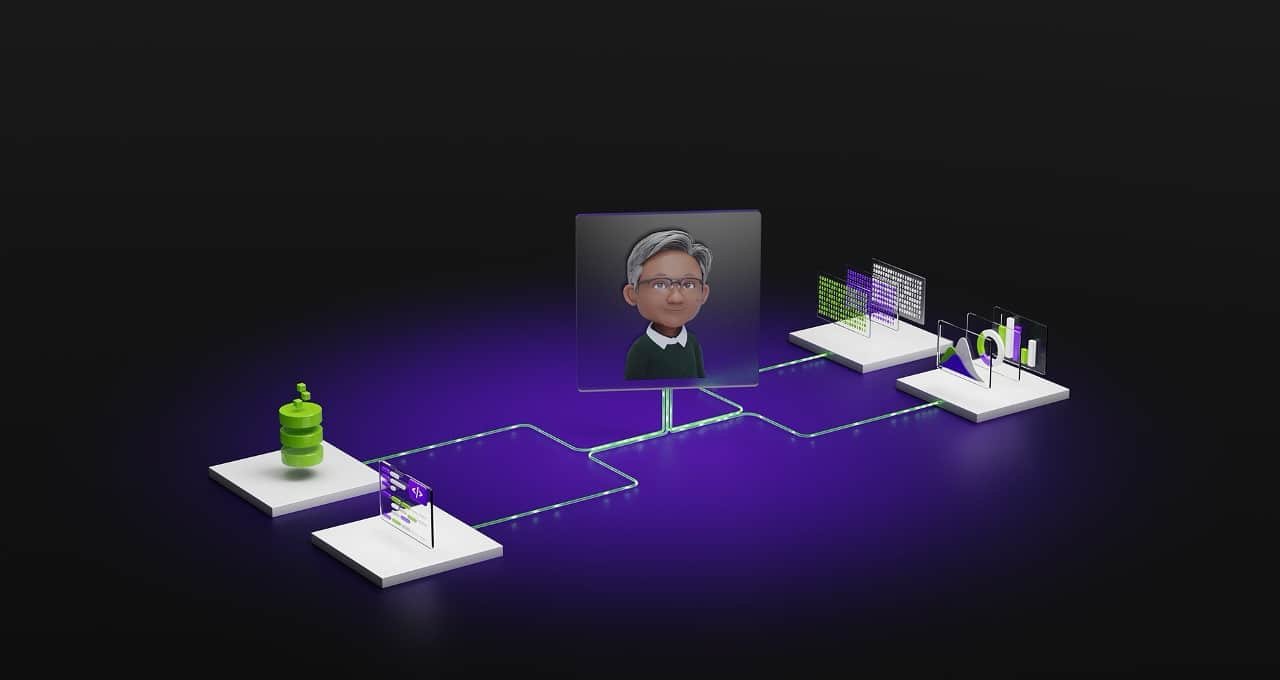
  • Nvidia Unveils Open-Source Llama and Cosmos Nemotron LLM Model Families to Build AI Agents at CES 2025

    Nvidia Unveils Open-Source Llama and Cosmos Nemotron LLM Model Families to Build AI Agents at CES 2025

    At CES 2025, NVIDIA revealed the Nemotron model families, a groundbreaking step in artificial intelligence. These models include the open-source Llama Nemotron large language models (LLMs) and the Cosmos Nemotron vision language models (VLMs). Designed to boost AI agents’ abilities, these models are available as NVIDIA NIM microservices, making them easy to use on a variety of systems, from data centers to edge devices.

    What is the Nemotron Ecosystem?

    • NVIDIA NIM Microservices
      These microservices make it simple to add Nemotron models to different setups, ensuring high-performance AI capabilities with flexibility and scalability.
    • Llama Nemotron LLMs
      Based on the successful Llama architecture, these models come in three sizes: Nano, Super, and Ultra. Each size caters to specific needs, from low-latency tasks to high-accuracy applications. These LLMs are optimized for key AI tasks like generating human-like responses, coding, and solving complex math problems.
    • Cosmos Nemotron VLMs
      These vision language models combine image understanding with language processing, enabling AI agents to interpret and interact with visual data. This is useful for tasks like autonomous driving, medical analysis, and retail planning.
    • Scalable and Efficient Performance
      The Nemotron models use NVIDIA’s advanced training and optimization techniques to ensure they perform well and scale effectively across different hardware systems.

    Real-World Use Cases

    Major companies like SAP and ServiceNow are already using these models.

    • SAP is integrating them to improve AI-driven supply chain management.
    • ServiceNow aims to enhance its customer service AI agents for better user experiences.

    These early applications highlight how Nemotron models can automate complex tasks, improve decision-making, and streamline operations in industries like logistics, customer service, and healthcare.

    How It Works

    NVIDIA’s NeMo framework allows users to customize the Nemotron models for specific needs. For faster deployment, NVIDIA Blueprints offer ready-made solutions for building AI agents.

    Community Buzz and Open-Source Impact

    The Nemotron models have generated excitement across social platforms like X, where developers and AI enthusiasts are discussing their potential. NVIDIA’s decision to open-source the Llama Nemotron models encourages global collaboration, allowing developers to adapt and expand their capabilities for different industries.

    The Future of AI Agents

    NVIDIA’s Nemotron models pave the way for smarter, more capable AI agents that can handle complex tasks in real-world scenarios. With advancements in language and vision processing, these models could reshape industries and drive innovation in AI applications worldwide.

    Links

    https://build.nvidia.com/nvidia/llama-3_1-nemotron-70b-instruct

    https://build.nvidia.com/nvidia/cosmos-nemotron-34b

    https://huggingface.co/models?search=nemotron

    https://huggingface.co/nvidia/nemotron-3-8b-base-4k

    https://huggingface.co/nvidia/Llama-3.1-Nemotron-70B-Instruct-HF

    https://huggingface.co/nvidia/Llama-3.1-Nemotron-70B-Reward

  • Hugging Face Launches Smolagents to Simplify AI Agent Development with Open Source LLMs

    Hugging Face Launches Smolagents to Simplify AI Agent Development with Open Source LLMs

    Hugging Face has introduced Smolagents, an open-source library designed to make building AI agents with large language models (LLMs) easier for developers and enthusiasts. By simplifying the process, Smolagents opens the door for a wider audience to create intelligent systems with minimal complexity.

    A Simpler Approach to AI

    Smolagents is built to be lightweight and easy to use, with just 1,000 lines of code forming its core. Unlike traditional, complex methods for integrating LLMs into agent systems, Smolagents offers a streamlined approach that includes both code-based and JSON-based agents, making it flexible and beginner-friendly.

    Key Features of Smolagents

    1. CodeAgent for Python Actions: The standout feature, CodeAgent, allows agents to write and execute Python actions directly. This method is faster and more accurate than relying on text or JSON descriptions.
    2. Support for Multiple LLMs: Smolagents works seamlessly with Hugging Face models via their free API and supports over 100 other LLMs through LiteLLM, giving users a range of options for their projects.
    3. Hugging Face Hub Integration: Developers can easily share and reuse tools through the Hugging Face Hub, speeding up development and fostering collaboration within the community.
    4. Security and Efficiency: The library ensures safe execution of code in sandboxed environments, reducing risks, while also minimizing the number of LLM calls to maximize performance.

    Real-World Applications

    Smolagents is ideal for industries needing dynamic and adaptable workflows. It can be used for automating customer service in sectors like travel, building intelligent assistants for data analysis, or creating educational tools. By reducing the complexity of developing AI-powered agents, Smolagents enables faster and broader adoption of AI solutions.

    Community Response and Future Plans

    The AI community has responded positively to Smolagents, with developers praising its simplicity and versatility on platforms like X (formerly Twitter). Many have called it a “game-changer” for building AI tools without requiring advanced knowledge of system architectures.

    Hugging Face plans to expand Smolagents by adding new features and integrations based on feedback. This library replaces the older transformers.agents, reflecting Hugging Face’s commitment to creating more user-friendly AI development tools.

    The Bigger Picture

    Smolagents is more than just a technical tool; it represents a step toward democratizing AI. By making AI agent development accessible and efficient, Hugging Face is empowering developers and innovators to explore new possibilities, paving the way for a future where intelligent systems are easier to build and deploy.

    Links

    https://huggingface.co/docs/smolagents/index

    https://github.com/huggingface/smolagents

  • OpenAI Launches O3 Models: A New Era of AI Reasoning

    OpenAI Launches O3 Models: A New Era of AI Reasoning

    OpenAI has introduced its newest AI models, O3 and O3-mini, which promise to bring major improvements in how AI thinks and solves problems.

    Smarter and Better Problem-Solving

    The O3 models are designed to handle logic, problem-solving, and complex tasks much better than older versions. OpenAI says these models are especially good at coding, math, and science. For example, O3 is 20% better than its predecessor, O1, in coding tasks. It also scored 96.7% on the AIME 2024 math exam and 87.7% on a graduate-level science test, making it highly reliable for technical challenges.

    Focus on Safety

    OpenAI is making safety a top priority. They’ve introduced a new method called “deliberative alignment,” which ensures the AI carefully considers safety before responding. This reduces risks like misleading or harmful outputs, keeping the AI reliable and ethical.

    When Can You Use It?

    The full O3 model will be available after more safety testing, but O3-mini will launch by the end of January 2025. OpenAI is working with researchers to make sure the models are safe and reliable before a wider release.

    Competition and Expectations

    This release comes as other companies, like Google with its Gemini 2.0 model, are also pushing AI boundaries. O3 has sparked online discussions about AI getting closer to human-like intelligence, though OpenAI says O3 is not yet artificial general intelligence (AGI).

    Economic and Social Impact

    With its advanced abilities, O3 might change industries like coding and technical work, raising concerns about job automation. At the same time, it offers benefits like improved efficiency and problem-solving. Discussions continue about how to develop AI responsibly to maximize benefits without harming ethical standards.

    As AI continues to grow, OpenAI’s O3 models could play a major role in shaping how AI is used in daily life and work. The tech world is watching closely to see how this breakthrough technology will evolve.

  • Aitomatic Launches SemiKong,An Open-Source LLM for Semiconductor Industry

    Aitomatic Launches SemiKong,An Open-Source LLM for Semiconductor Industry

    Aitomatic, in partnership with members of the AI Alliance, has introduced SemiKong, the world’s first open-source Large Language Model (LLM) designed specifically for semiconductor manufacturing, design, and innovation. Announced at SEMICON West 2024, SemiKong is expected to revolutionize the semiconductor industry, which is valued at $500 billion, and reshape its landscape over the next five years.

    What is SemiKong?

    SemiKong is built on Meta’s Llama 3.1 platform and has been fine-tuned using a semiconductor-specific dataset that includes industry documents, research papers, and anonymized operational data. This specialized LLM demonstrates improvements in accuracy, relevance, and understanding of semiconductor processes, outperforming general-purpose models in tasks specific to the industry.

    Performance Highlights

    • Faster Chip Design: SemiKong can reduce chip design time-to-market by up to 30%, cutting costs and improving efficiency.
    • Better Manufacturing Outcomes: It improves first-time-right manufacturing by 15-25%, offering tangible benefits for semiconductor companies.

    Key Features of SemiKong

    • Domain-Specific Knowledge: SemiKong is trained to understand the unique terminology and processes of the semiconductor industry.
    • Integration with Domain-Expert Agents (DXAs): This feature allows companies to create AI agents that capture and scale the expertise of veteran engineers for specific industry challenges.
    • Multilingual Capabilities: With training on a 3 trillion token multilingual corpus, SemiKong can understand various languages, addressing the global nature of the semiconductor industry.

    Industry and Expert Reactions

    Industry experts have praised the launch of SemiKong. Dr. Christopher Nguyen, CEO of Aitomatic, said the model will “redefine semiconductor manufacturing” with its open innovation approach. Daisuke Oku from Tokyo Electron noted that SemiKong represents “the beginning of an exciting journey in open-source AI for semiconductors.” The announcement has also sparked discussions on platforms like X (formerly Twitter), where tech experts are excited about the potential for faster and more efficient chip design and manufacturing.

    Potential Impact on the Semiconductor Industry

    • Innovation: By reducing the learning curve for new engineers and enabling quicker access to expert knowledge, SemiKong could speed up innovation within the sector.
    • Cost Savings: Faster design and manufacturing processes could lead to significant cost reductions, potentially making consumer electronics more affordable.
    • Open-Source Collaboration: As an open-source model, SemiKong encourages broader industry collaboration, which could drive a wave of innovation as more companies and researchers contribute to its development.

    Looking Ahead

    Aitomatic plans to continue enhancing SemiKong with future updates aimed at addressing more specific challenges in semiconductor fabrication and design. With ongoing R&D, SemiKong is poised to become an essential tool in the semiconductor industry’s push toward innovation and efficiency.

    Links

    https://github.com/aitomatic/semikong

    https://huggingface.co/pentagoniac/SEMIKONG-8b-GPTQ

    https://huggingface.co/pentagoniac/SEMIKONG-70B