Tag: Nvidia

  • NVIDIA Launches Tools to Help Enterprises Adopt AI Agents Safely

    NVIDIA Launches Tools to Help Enterprises Adopt AI Agents Safely

    NVIDIA Corporation has introduced three new tools to help businesses use AI more safely and securely. These tools, called NVIDIA Inference Microservices (NIM), are designed to ensure AI systems follow rules and stay ethical. They are part of NVIDIA’s plan to encourage more companies to adopt AI technology.

    What Are the New Tools?

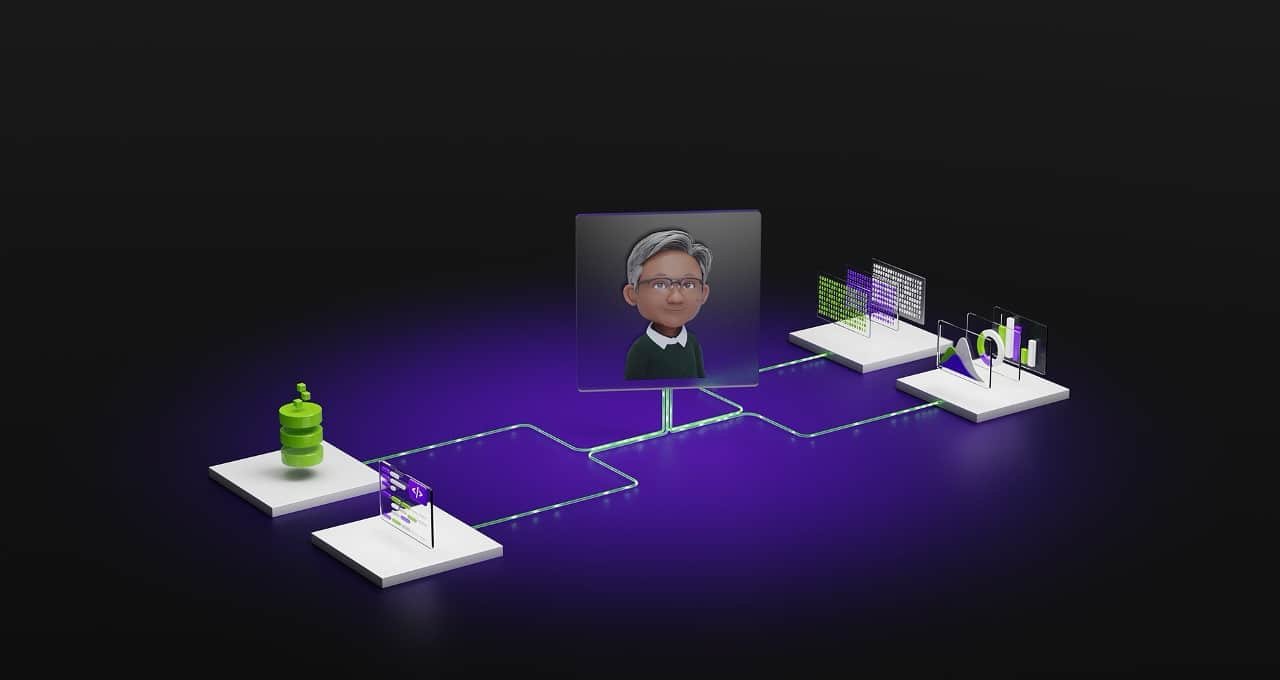
    The new tools are part of NVIDIA’s NeMo Guardrails framework, which helps developers build trustworthy AI systems. The three tools focus on:

    • Content Safety: This tool stops AI systems from creating harmful or biased content. It ensures responses meet ethical standards.
    • Topic Control: This service keeps AI conversations on-topic and avoids inappropriate discussions.
    • Jailbreak Detection: This feature protects AI systems from being misused by detecting and blocking attempts to bypass restrictions.

    Why Are These Tools Important?

    More businesses are using AI systems, but concerns about safety and trust slow down adoption. NVIDIA’s new tools address these concerns, making it easier for companies to use AI agents, or “knowledge robots,” without fear of mistakes or misuse.

    Studies show that around 25% of companies are already using AI agents or plan to start in 2025. By 2027, half of all businesses are expected to use them. NVIDIA’s tools could help speed up this shift by building trust in AI technology.

    A Smarter Way to Use AI

    NVIDIA’s Vice President, Kari Briski, explained why these tools matter:
    “By using small, specialized models, developers can fix gaps that general protections might miss. This approach ensures AI systems are safe and efficient, even in complex situations.”

    These tools also work quickly, even on computers with limited resources. This makes them ideal for companies wanting to use AI on a large scale.

    Teaming Up for Success

    NVIDIA is working with companies like Accenture, Cisco, and SoftServe to bring these tools to more businesses. These partnerships aim to make AI easier to use and safer for everyone.

    Social media platforms like X have seen positive reactions, with many calling this a big step forward for safer AI in business. However, experts note that the true value of these tools will only be clear once they are tested in real-world settings.

    NVIDIA’s Role in Shaping the Future of AI

    NVIDIA is already known for its AI hardware, but this move shows its commitment to solving real-world problems with software too. By making AI safer and more practical, NVIDIA is helping shape how businesses use AI in the future.

    The tech world will be watching closely to see how these tools perform and how they might change the way companies work with AI in the years to come.
  • Nvidia Invests $4 Million in Taiwanese AI Startup MetAI

    Nvidia Invests $4 Million in Taiwanese AI Startup MetAI

    In a major announcement, Nvidia has revealed its first-ever $4 million investment in a Taiwanese startup, MetAI. The company specializes in creating AI-powered digital twins, marking a milestone in the tech giant’s efforts to support innovation in industrial AI applications.

    MetAI’s Groundbreaking Technology

    MetAI has developed a unique model that uses AI and 3D technology to quickly produce “SimReady” digital twins. These are simulation-ready environments capable of converting CAD files into working 3D models in just minutes. This innovation is a game-changer for industries that rely on simulations to train autonomous systems like robots.

    Details of the Investment

    Nvidia led a $4 million seed funding round for MetAI, joined by investors such as Kenmec Mechanical Engineering, Solomon Technology, SparkLabs Taiwan, Addin Ventures, and Upstream Ventures. The funds will help MetAI enhance its research, speed up product development, and bring its solutions to market faster.

    A Strategic Partnership

    This partnership with Nvidia goes beyond funding. MetAI is integrating its technology with Nvidia’s Omniverse platform, a move expected to redefine industrial digital twins. Nico Caprez, Nvidia’s Corporate Development Manager, praised MetAI’s work, saying it could set a new standard for industries like manufacturing and robotics.

    Founders and Their Vision

    MetAI was founded by Renton Hsu, Yu, and Dave Liu, each bringing unique expertise. Hsu, the CTO, is an award-winning AI expert, while Yu, the CEO, has led digital transformation projects. Liu, the COO, has a strong background in entrepreneurship and investment.

    Future Plans

    MetAI is already making waves in the market. With Nvidia’s support, the company plans to expand operations, open a U.S. office, and possibly move its headquarters to the U.S. by late 2025. Their technology has demonstrated impressive results, reducing simulation times for warehouse digital twins from thousands of hours to just three minutes.

    Industry Buzz

    The tech world is abuzz with this announcement, with many highlighting MetAI’s potential to revolutionize automation and AI training. Experts believe this investment could reshape manufacturing, logistics, and other industries by enabling faster and smarter AI simulations.

    This partnership signals the rising importance of AI-powered digital twins and the role they will play in the future of industrial applications.

    Links

    https://www.met-ai.net/en

  • Nvidia Unveils Open-Source Llama and Cosmos Nemotron LLM Model Families to Build AI Agents at CES 2025

    Nvidia Unveils Open-Source Llama and Cosmos Nemotron LLM Model Families to Build AI Agents at CES 2025

    At CES 2025, NVIDIA revealed the Nemotron model families, a groundbreaking step in artificial intelligence. These models include the open-source Llama Nemotron large language models (LLMs) and the Cosmos Nemotron vision language models (VLMs). Designed to boost AI agents’ abilities, these models are available as NVIDIA NIM microservices, making them easy to use on a variety of systems, from data centers to edge devices.

    What is the Nemotron Ecosystem?

    • NVIDIA NIM Microservices
      These microservices make it simple to add Nemotron models to different setups, ensuring high-performance AI capabilities with flexibility and scalability.
    • Llama Nemotron LLMs
      Based on the successful Llama architecture, these models come in three sizes: Nano, Super, and Ultra. Each size caters to specific needs, from low-latency tasks to high-accuracy applications. These LLMs are optimized for key AI tasks like generating human-like responses, coding, and solving complex math problems.
    • Cosmos Nemotron VLMs
      These vision language models combine image understanding with language processing, enabling AI agents to interpret and interact with visual data. This is useful for tasks like autonomous driving, medical analysis, and retail planning.
    • Scalable and Efficient Performance
      The Nemotron models use NVIDIA’s advanced training and optimization techniques to ensure they perform well and scale effectively across different hardware systems.

    Real-World Use Cases

    Major companies like SAP and ServiceNow are already using these models.

    • SAP is integrating them to improve AI-driven supply chain management.
    • ServiceNow aims to enhance its customer service AI agents for better user experiences.

    These early applications highlight how Nemotron models can automate complex tasks, improve decision-making, and streamline operations in industries like logistics, customer service, and healthcare.

    How It Works

    NVIDIA’s NeMo framework allows users to customize the Nemotron models for specific needs. For faster deployment, NVIDIA Blueprints offer ready-made solutions for building AI agents.

    Community Buzz and Open-Source Impact

    The Nemotron models have generated excitement across social platforms like X, where developers and AI enthusiasts are discussing their potential. NVIDIA’s decision to open-source the Llama Nemotron models encourages global collaboration, allowing developers to adapt and expand their capabilities for different industries.

    The Future of AI Agents

    NVIDIA’s Nemotron models pave the way for smarter, more capable AI agents that can handle complex tasks in real-world scenarios. With advancements in language and vision processing, these models could reshape industries and drive innovation in AI applications worldwide.

    Links

    https://build.nvidia.com/nvidia/llama-3_1-nemotron-70b-instruct

    https://build.nvidia.com/nvidia/cosmos-nemotron-34b

    https://huggingface.co/models?search=nemotron

    https://huggingface.co/nvidia/nemotron-3-8b-base-4k

    https://huggingface.co/nvidia/Llama-3.1-Nemotron-70B-Instruct-HF

    https://huggingface.co/nvidia/Llama-3.1-Nemotron-70B-Reward

  • Nvidia Acquires Israeli AI Startup Run:ai for $700M, Plans to Make It Open-Source

    Nvidia Acquires Israeli AI Startup Run:ai for $700M, Plans to Make It Open-Source

    Nvidia Corporation has finalized its acquisition of Run:ai, an Israeli AI startup known for its software that optimizes hardware for AI tasks. The deal, valued at approximately $700 million, enhances Nvidia’s capabilities in the growing AI infrastructure market.

    Acquisition Approved After Regulatory Review

    The acquisition was initially announced in April of last year but faced regulatory scrutiny from both the U.S. Department of Justice and the European Commission due to potential antitrust concerns. After extensive reviews, both regulatory bodies approved the deal, allowing Nvidia to close the transaction.

    Run:ai’s Technology and Role

    Run:ai specializes in AI workload optimization. Its flagship product, Atlas, helps organizations manage AI computing resources by automating the distribution of tasks. This enables companies to maximize the efficiency of their AI hardware. Run:ai’s software serves a range of industries, including healthcare and automotive.

    Strategic Acquisition for Nvidia

    This acquisition marks Nvidia’s second major investment in Israel, following its $7 billion purchase of Mellanox Technologies in 2020. Run:ai, which raised $118 million in funding prior to the deal, will now operate as part of Nvidia, with plans to expand its technology and capabilities under Nvidia’s resources.

    Impact on the AI Market

    Nvidia’s acquisition of Run:ai is expected to bolster its AI infrastructure offerings, strengthening its position in the market, where it already holds around 80% of the AI GPU market share. Run:ai’s plans to open-source its software could also increase accessibility and foster innovation within the AI ecosystem.

    Industry Reaction

    The acquisition has received positive reactions from the tech community, with many highlighting Nvidia’s strategy to integrate and build on existing technologies. However, some concerns have been raised about the potential for reduced competition, echoing the regulatory scrutiny the deal faced.

    Looking Ahead

    The acquisition of Run:ai is seen as a strategic move for Nvidia to address the rising demand for AI solutions across various industries. Nvidia aims to accelerate AI adoption and expand its research and development efforts, particularly in Israel, where it already has a significant workforce.